Speaker STOPS Heckler
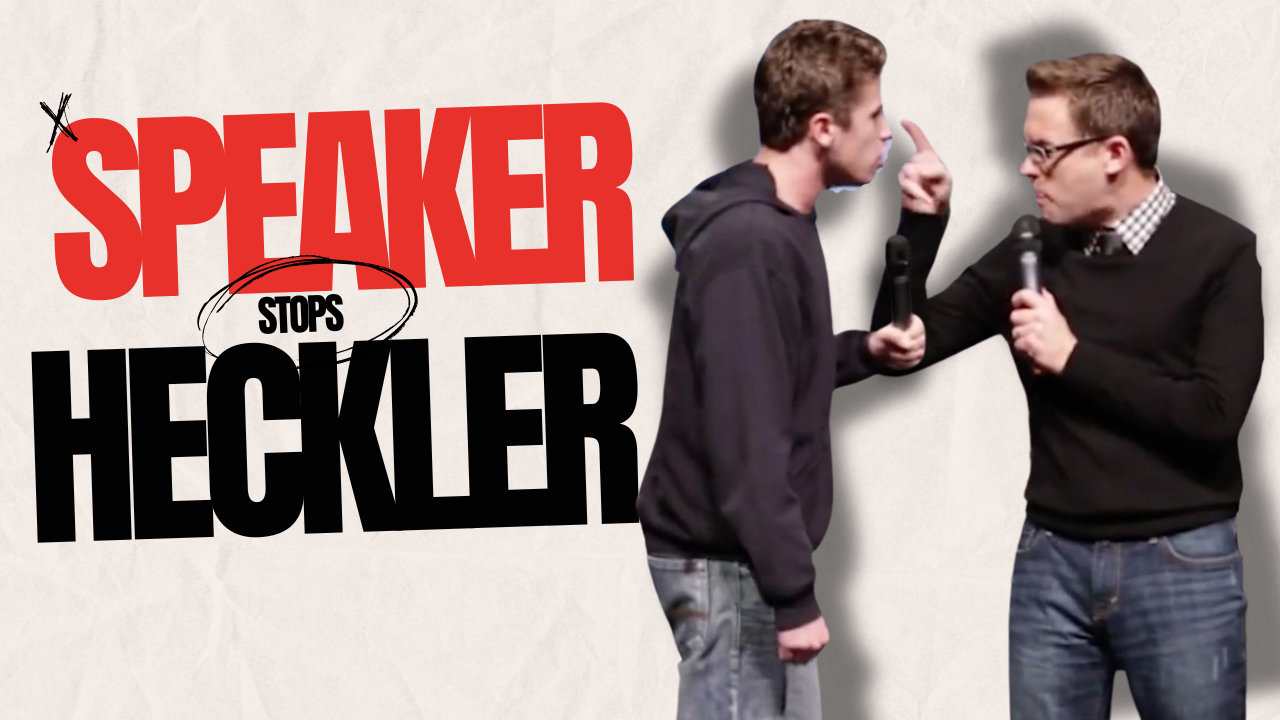
Most people think a heckler wants to win an argument. Usually, they don't. What they really want is a reaction.
Provocateurs are often seeking dominance. They want to know whether they can control your emotions. Can they make you angry? Can they make you defensive? Can they make you lose your composure? If they can, they feel powerful.
This is why arguing with a heckler often makes things worse. The argument itself becomes the reward. Every emotional reaction proves that they have gotten under your skin. Every defensive response encourages them to keep going.
The surprising solution is to stop playing the game.
When you remain calm, refuse to be offended, and respond with kindness or confidence, the heckler loses what they came for. They expected a fight. They expected outrage. They expected resistance. Instead, they find someone who cannot be emotionally controlled.
That creates a problem for the provocateur. Their strategy depends on your reaction. Without it, the interaction becomes awkward and unrewarding. They quickly begin to run out of momentum.
This is one reason the Golden Rule is so powerful. When someone is rude, insulting, or disrespectful, our instinct is to return the favor. But when we treat people with respect, even when they don't deserve it, we keep control of ourselves and deny them control over us.
The strongest person in the room is not the one who can trigger anger in others. It's the one who cannot be easily triggered at all.
BG
--
If you enjoyed this video, consider getting access to my online library of videos!
https://www.brooksgibbs.com/curriculum
Classroom Lesson: Speaker STOPS Heckler
Objective
Students will learn why provocateurs, hecklers, and agitators often seek emotional reactions and how emotional self-control can reduce conflict and increase confidence.
Essential Question
Why do some people try to provoke others, and what is the most effective way to respond?
Before Watching
Ask students:
-
Have you ever met someone who seemed to enjoy pushing people's buttons?
-
Why do you think some people try to provoke others?
-
What reaction are they usually hoping to get?
Allow students to discuss with a partner before sharing with the class.
Watch the Video
Video: Speaker STOPS Heckler
As students watch, ask them to pay attention to two things:
-
What happens when the speaker argues with the heckler?
-
What happens when the speaker remains calm and positive?
Discussion Questions
Observation
-
What was the heckler trying to accomplish?
-
How did the speaker respond during the first round?
-
How did the speaker respond during the second round?
-
Which response seemed more effective?
Critical Thinking
-
Why was it easier for the student to continue insulting the speaker during the first round?
-
Why did the student begin running out of things to say during the second round?
-
What does this teach us about people who try to provoke others?
Application
-
Have you ever given someone exactly the reaction they were hoping for?
-
What might happen if you stayed calm instead?
-
What are some situations where this strategy could help you?
Teaching Point
Many provocateurs are not looking for a conversation. They are looking for a reaction.
When we become angry, defensive, or emotional, we often reward the behavior. The provocateur feels powerful because they successfully controlled someone else's emotions.
When we remain calm, confident, and respectful, we remove the reward. Without the reaction, many provocateurs quickly lose interest.
Emotional self-control is not weakness. It is strength.
Group Activity
The Reaction Game
Divide students into pairs.
Student A receives a harmless teasing statement such as:
-
"You're terrible at basketball."
-
"That shirt looks funny."
-
"Nobody likes your music."
Student B practices responding in three different ways:
-
Defensive response
-
Angry response
-
Calm and confident response
After each response, discuss:
-
Which response encouraged the teasing?
-
Which response reduced the teasing?
-
Which response demonstrated the most confidence?
Switch roles and repeat.
Reflection Writing
Have students respond to the following prompt:
"Describe a time when someone tried to get a reaction from you. Looking back, what could you have done differently? How might staying calm have changed the outcome?"
Key Takeaway
People can say almost anything they want.
That doesn't mean they get to control your emotions.
The strongest person in the room is often the one who remains calm when others are trying to provoke them.